photography


This is a long post, so first the short version. In the last year: I started working full time and am adjusting to that. I’m glad to be working towards my MFT licensure, but uncomfortable about how it pushes my relationships and other projects onto the back burner. My marriage gets better and better, despite this. The company I work for goes out of business so I get part of the summer off, and I get the exact same job (family therapist for US Marines & their families) with a new company.

And for the year ahead: I plan to continue this work, taking good care of myself, dance with Reanna every night, as promised to my friend, Tilke, in her “How to be a Real Artist” workshop, get in best shape in 5 years, and learn how to treat myself and Reanna really really well while working full time.

October: I started my year out at Farm & Wilderness, VT, staffing and teaching a really fun psychology project at Not Back to School Camp. As is traditional, I got really sick, but this time it was from a waitress in Rutland, not someone at NBTSC. I recuperated while visiting Ethan & Susannah, also in Vermont. Back in Joshua Tree, I started working out again (SERIOUS style), planted my first winter garden, fixed some electrical and plumbing problems in my trailer, and started setting up a private practice. In the process of hiring a supervisor, I found out that in California, unlike in Oregon, I cannot do my internship in a private practice. So I started looking for work in a local clinic.

Looking out over Woodward Reservoir from my cabin at Farm & Wilderness

Ethan, cataloging NBTSC lost & found in his library

The famous Quodlibetarian tub

Reanna

Reanna at Playa Del Rey

Ollie, a year ago

Ollie & Pap

Gabe, Damian & Maya on the Hwy 62 Art Tour

Trailer at sunset, looking south

November: I move into a new computer, archive my years of audio journal entries, and learn Sketchup while applying for and getting a job at Morongo Basin Mental Health: providing free, confidential therapy for US Marines, veterans, and their families. In what would become a series of small-town coincidences, a high school friend I hadn’t seen in decades worked there, saw my name on the interview list and sat in on my interview, interjecting stuff like, “Oh, yeah, good answer!” Nice way to interview. The manager of the military program assured me that the our contract was solid for at least two years. That’s about how long I need to get my hours for licensure, so the job sounded good–no chance of having to ditch my clients like I had to in grad school! I spent the rest of the month getting in as much time with Reanna and my family before starting full time work.

Rainbow over the Bartlet Mts

Maya & Ollie in hammock

Ollie helps Nana Honey cook

Me & Reanna

December:  My 93 year old Grandpa Bob gets really sick, and I get really sick taking care of him. I was pretty sure he was going to die. He had pneumonia and had to go on antibiotics for the first time in his life. It took me weeks to fully recover. He eventually recovered, too, but I’m not sure he’ll ever fully recover. He’s been on antibiotics off and on ever since and is progressively less mobile. It’s got me thinking a lot about dying–how I can support the people I love when they start having a hard time taking care of themselves, and how I want to die when my time comes.

I start at MBMH, reading 40 hours a week of protocols. I have Christmas with family in Joshua Tree. My brother Damian starts a weekly evening with family, listening to an integral Christianity lecture and meditation that turns out to be a presentation of integral theory to Christians, rather than Christianity to integral thinkers, but valuable nonetheless.

Reanna & Christina, Xmas

Reanna & Maya, Xmas

Ely, Christina, Pap, Ben, Rebeca, Xmas

Gabe, Ely, Ollie, Christina, Xmas

Reanna, ukulele, heater

Ollie, bundled up

January: I get my first paid vacation ever–one week off, fully paid by MBMH. Weird, pretty nice. I write my first attempt at a comprehensive political statement. Reanna and I start a three-month experiment with a strict “paleo” diet, which mostly means we cut out sugar and grains from our diet. The theory is that human adaptation to grains and refined anything is shallow at best. I also start cooking Mexican food (the paleo-friendly recipes) from Rick Bayless’ Authentic Mexican. I love it. And Reanna loves eating it. I start learning to play Reanna’s ukulele. I play and sing “Amazing Grace” most nights for a month. Fun!

I’m working full time, which I’ve never done. It’s not my favorite schedule. I had to let go of most of my projects. I started building a solar batch water heater in the fall, for example, that is still not finished. The schedule has simplified my life quite a bit. Work all day, spend the evening with Reanna. I gained more respect for my friends who’ve been working full time for decades and still manage to write some music or read books. I’m ramping into a caseload, though, and am seeing seven clients a week by the end of the month.

My endurance training is going great by this point. Mid month I got my heart rate up to 179 bpm without hurting myself. Very exciting.

Smiley and Gallant visit

Reanna in our clean, cold kitchen

Dinner’s almost ready. (Photo by Reanna.)

Grandpa Bob turns 94

Me in therapist costume, with Ollie. (Photo by Reanna.)

February: Full time work continues. I get trained in the Trauma Resiliency Model, which I find very cool and useful. I re-up the trademark on Abandon Ship. I feel sad that I can’t write music with my brothers right now, but have plenty of optimistic plans to do so… Reanna starts designing our future house, another exciting project that I have to watch from the sidelines. I love watching her get super deep into a topic like this, though. She is now the resident expert in passive-solar-optimized-very-small-house design. We start car shopping, too. We need to be independently mobile in Joshua Tree.

Trench. Hose feeding trailer finally to be buried.

Reanna & treehouse near the Mexican border

Ollie, Damian

March: I’m up to 16 clients at MBMH and I’m fighting for mastery of the intense paperwork load. The clinical work is going great. My supervisor is good, I am fully engaged by my clients, and I get to see a good variety of folks–kids, adults, families, couples. The paperwork is fairly unpleasant, though. Mental health providers that get government funding spend a huge amount of time and energy creating and maintaining a paper trail for their work. These clinics get paid based on the work they claim to have done and then various agencies can audit their files and take that money back if a box wasn’t checked or a T wasn’t crossed. I spend my first very late day at work in March, trying to catch up on paperwork. Reanna is not happy.

Highlights: A great lecture by Bruce Perry, planting my first spring/summer garden, endurance training going great (I work out during my lunches at MBMH), meeting the Transition Joshua Tree folks. And Reanna. Reanna is wonderful.

Lowlights: My truck fails smog and I begin what becomes an expensive debacle trying to get it to pass.  I start having sync problems with my Mac that I am still dealing with as I write. I start working on our taxes on weekends. Reanna is Canadian and that makes our taxes super complicated and somehow even though we hired a professional we ended up owing big fines.

Abandon Ship cover art, for the TM folks. Art by Tilke.

Damian & Ollie in old billy goat pen, future garden

Me, just having sunk the garden beds. (Photo by Reanna)

Reanna planting pepper starts

Ollie

Ollie & Reanna take the trash out

Ollie & Reanna rest in the hammock

April: I find out that Morongo Basin Mental Health has decided to go out of business after more than 40 years, at the end of June. That’s quite a shock and less for me than for the many decade-plus employees I work with. At home, our three months of paleo is up and I feel fine, as I have on just about every diet I’ve tried, but it clearly had not solved any of the problems we’d been tracking for the experiment. And I am sick in bed for a week for a third time this year. Reanna’s parents arrive for a month long visit. I don’t get to see them as much as I’d like, but we get in some fun events (like the Morongo Basin Conservation Association’s “Desertwise Landscape Tour” and Transition Joshua Tree’s Water Catchment Workshop), good talks, good swimming.  I get trained in sand-tray therapy by my supervisor, Richard Gray, which I find quite useful.

Reanna preps cholla buds for dinner

Family dinner at Damian & Maya’s (Damian with Bugzooka)

Doug & Kathryn up San Jacinto

May: We get a great little car, a gift from Reanna’s parents. It gets 38 mpg unless we use the AC.  At work, emotions are high and rumors are flying around. I try to avoid it as much as possible. My coworkers are mostly looking for work with great intensity. I decide that I will chill instead, concentrate on my clients, and do what I can to get my job back with whatever company picks up the military contract in the summer.  Meanwhile,  something is eating my garden. My weekends and after work time is often spent critter-proofing.

The highlight of the month by far is meeting my new nephew, Julian.

Julian in sling

Ollie in work gloves

First scorpion of a scorpion-rich year

June: I’m at 21 clients at the beginning of my last month at MBMH. The management has had me continue taking new clients but I’m starting to get nervous about it. It’s starting to look like my clients will have a significant lapse in services, and it pisses me off. I write people in charge at the county and local journalists but no-one can say how long it will take to get the military program back up and running. I know I’m fine. I can look forward to a full season working at NBTSC if things go badly. It sucks, though, that my clients are just getting dumped. It’s screwed up. I just have to set them up as best I can for the lapse and do the tons of paperwork to close their charts. Meanwhile, my co-worker, Jackie, introduces me to Candy Crush, which starts sucking up the cracks in my schedule.

Highlights: Jonathan & Ayako’s wedding in Idaho. Motorcycle safety class with Reanna. And being married to Reanna, of course.

Living room pano: Ely, Christina, Julian, Ben, Rebeca visit

Ben & Julian

North end pano from on top of Reanna’s sewing RV

Ayako & Jonathan, getting married

July: I’m unemployed again, but within two weeks I get interviewed by Pacific Clinics, the company who got the military contract that I’d been working for at MBMH. It looks like I’ll get the job based on the reputation I’d made for myself in that position. That feels good! It means I’ll miss most of NBTSC this year, too, for the first time in 14 years.

Reanna leaves for OR to do prep work for NBTSC and I delete Candy Crush from my phone so I can get some things done: install AC in our trailer, create an outside pantry, build a greywater cistern, make a front step for the trailer, get my motorcycle license, and a few other things. Satisfying. Then I fly up to OR to work the Camp Latgawa session of NBTSC.

Reanna hangs our laundry while I goof off with the camera

Cistern in progress

Julian & me

August: Finish at NBTSC (wonderful, as usual), and spend a few short days in Eugene at an NBTSC leadership summit, then back to Joshua Tree for my last week of unemployment. I completed some last-minute landscaping and plumbing projects, built a dry toilet and installed a weather station, then started training at Pacific Clinics in Arcadia.

At the end of August, Reanna got back from her travels, and we started shutting down all lights and electronics at 8pm and just hanging out until going to bed. This was lovely. We usually laid in the hammock outside, talking and looking at stars. The desert summer evenings are really, really nice. Especially with Reanna.

My advisee group, NBTSC Camp Latgawa

Ely & Julian before dinner

Reanna & Ollie, downtown Joshua Tree

September: I start making contact with clients and by the end of the month I’m back up to 7 clients. This is exciting, and it’s nice to be working with some of my old co-workers from MBMH, and the new crew at Pacific Clinics is an entertaining bunch. Working full time again limits what I can do in terms of projects, but I manage to put a new roof on the old goat pen/the new outside pantry, go visit Quail Springs permaculture farm, and start building a new composter with my 2-year-old nephew, Ollie.

At the end of the month, I have my first birthday at home in many years. Usually I’m at camp. It’s nice. My family threw me a little party and I’m glad to be here, even though I miss my people at Farm & Wilderness.

Yes, Ollie wants to help build the composter!

Rain Event, 29 Palms

With Reanna & ocotillo, on my 42nd birthday.

We just had a big rain in Joshua Tree–over an inch in a short period of time. After a rain like that, within hours, tiny plants start sprouting in what had been bare sand for a year. It may be because I haven’t paid close enough attention, or it may be because different seeds sprout after different kinds of rain events, but these plants are unfamiliar to me. I don’t know what they are called or even if I’ve seen them before.

This is about 4″ tall, the biggest I’ve seen so far.

This grows really fast. It’s about a foot wide.

This is maybe 1.5 inches across and appeared late–maybe a week after the rain.

This is less than an inch tall. It first looked like a miniature succulent, then a miniature cactus. Something is eating them down to a nub at a quick pace. It was one of the first to appear: http://instagram.com/p/dxmcnNF6TW/

This makes a low ground cover over maybe 10 square feet. It’s maybe 3/4 of an inch tall.

This came up late, too. The big ones are about an inch tall so far.

I just noticed this one today. The ring is about 4″ across.

I don’t think this one is a mystery. We call it ragweed and it shoots up anywhere the ground has been disturbed, like roadsides and scraped lots. This plant was about a foot tall but I’ve seen many of them waist-high.

I work at the Monterey Business Center in Yucca Valley, California, which is about 250,000 square feet of flat roofs and cement parking lot. I’d been wondering what all that would look like in a rain event and on August 29, 2013 I found out.

Monterey Business Center arial from Google Maps

Monterey Business Center arial from Google Maps

Jackie is not as excited about the rain as I am.

Roof water pours onto the sidewalk and into the parking lot

The parking lots have channels to direct water to the street

Onto the street

Down the street

Off the end of the street

Into a gully. (The blue-topped pipe in the gully says “water” on it. I thought that was hilarious.)

Down the gully

Flash flood in Yucca Valley on Make A Gif

And through the desert

pkvKsi on Make A Gif, Animated Gifs

Until it hits the berm of a road

Until it breaks through onto the road

And starts to flow down the road

This is where it ran out of steam. The water puddled up here and then mostly evaporated, “To rain again on someone else, east of us,” as Buck from Transition JT says. If there had been more water, it would have poured down this road and into a slightly more intentional gully at the end of it:

It would eventually hit the big wash in front of those mountains in the distance and flow east to the dry lake bed that is just west of Copper Mountain, maybe 18 miles away. That’s the lowest point in our watershed.

dry lake

Copper Mountain, Sunfair lake bed in front.

[animated gifs made at MakeAGif]

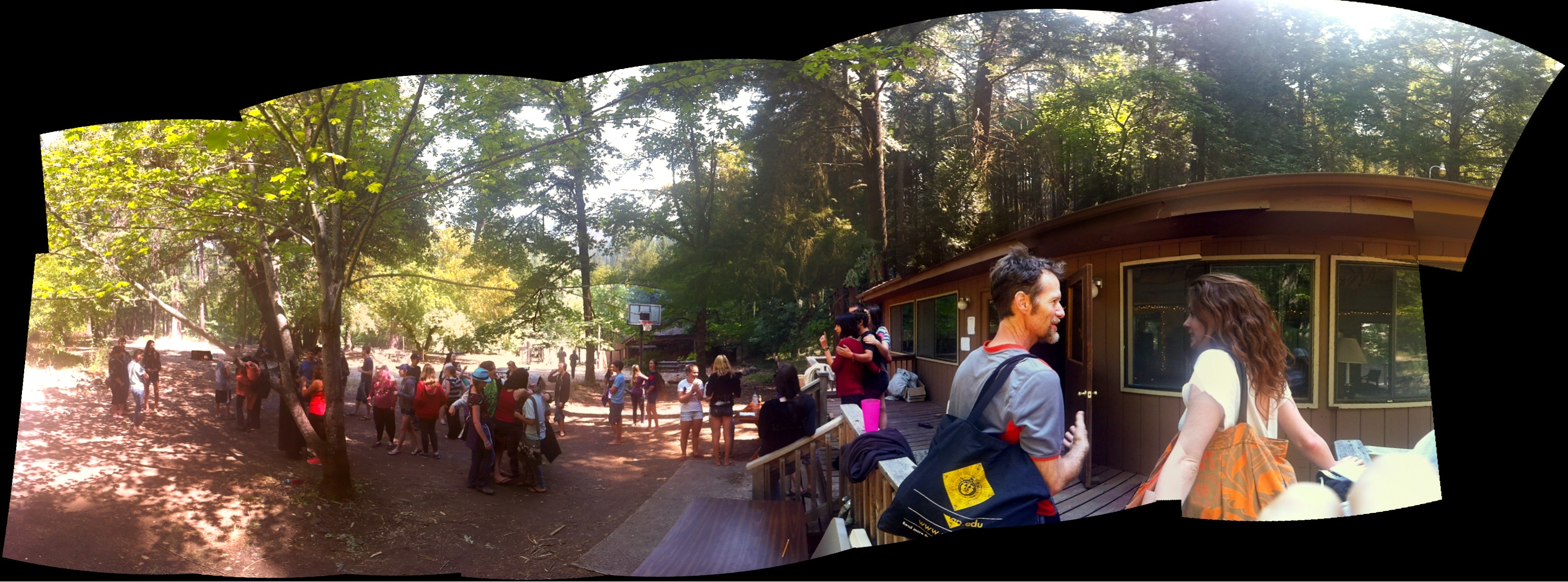
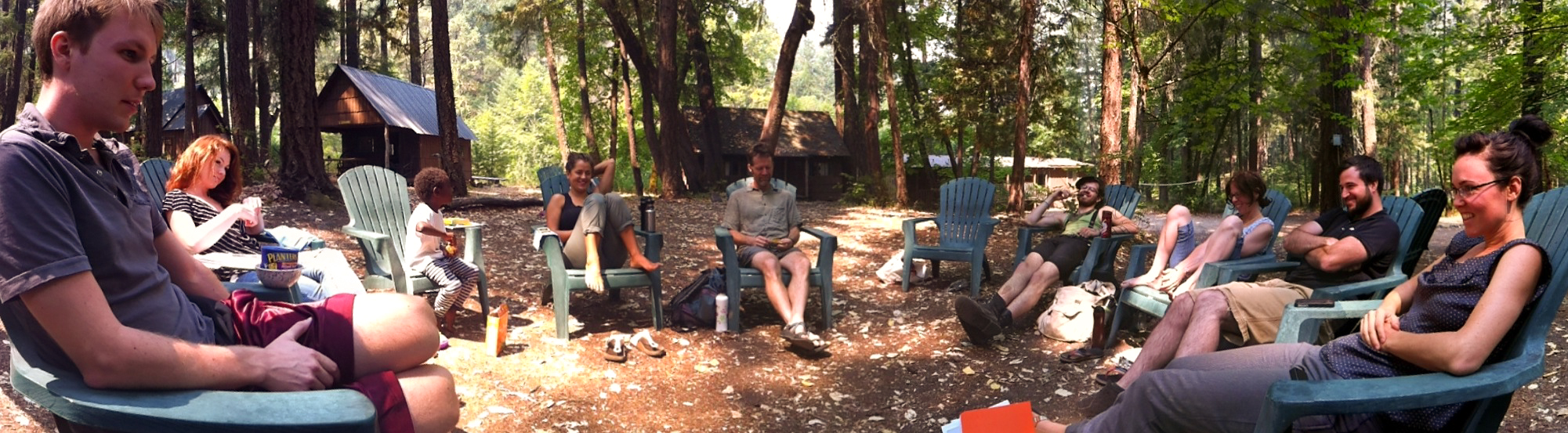
I have an app called Photosynth that stitches photos into panoramas. It’s fast enough that you can get decent shots of crowds of people, which I like. The resolution isn’t great, and if the light varies a lot you can lose the brightest details, but I’ve been having a lot of fun with it. Here are some panoramas from Not Back to School Camp Latgawa 2013:

20130728-IMG_3058

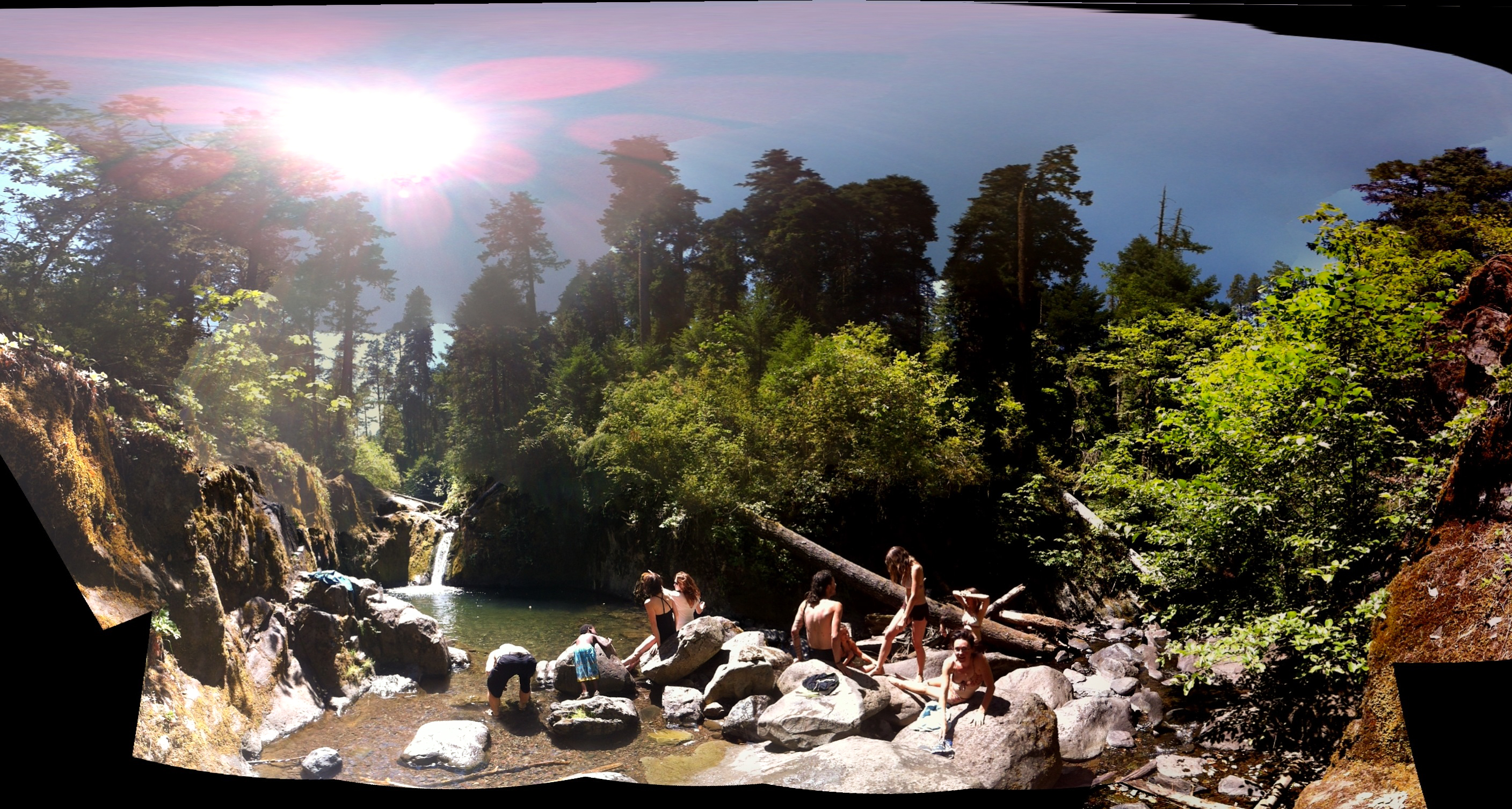
Staff at the swimming hole the day before camp

20130729-IMG_3059

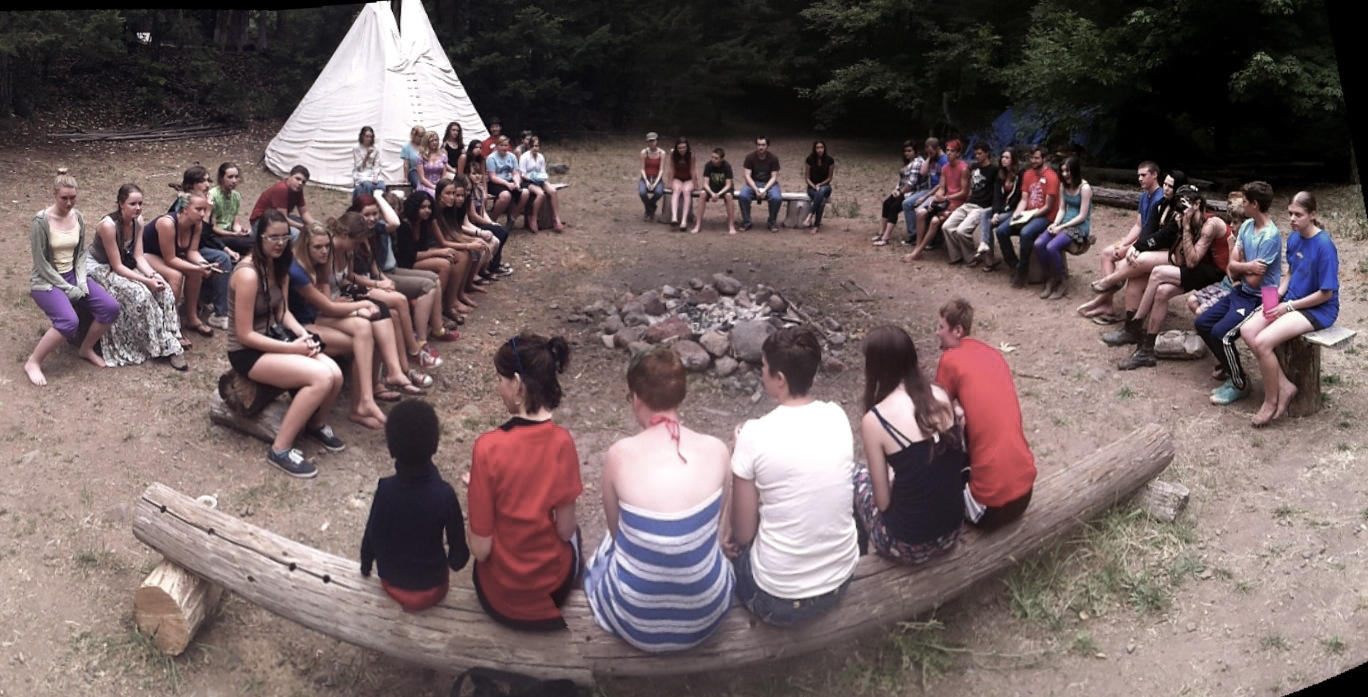
Welcome circle

20130730-IMG_3060

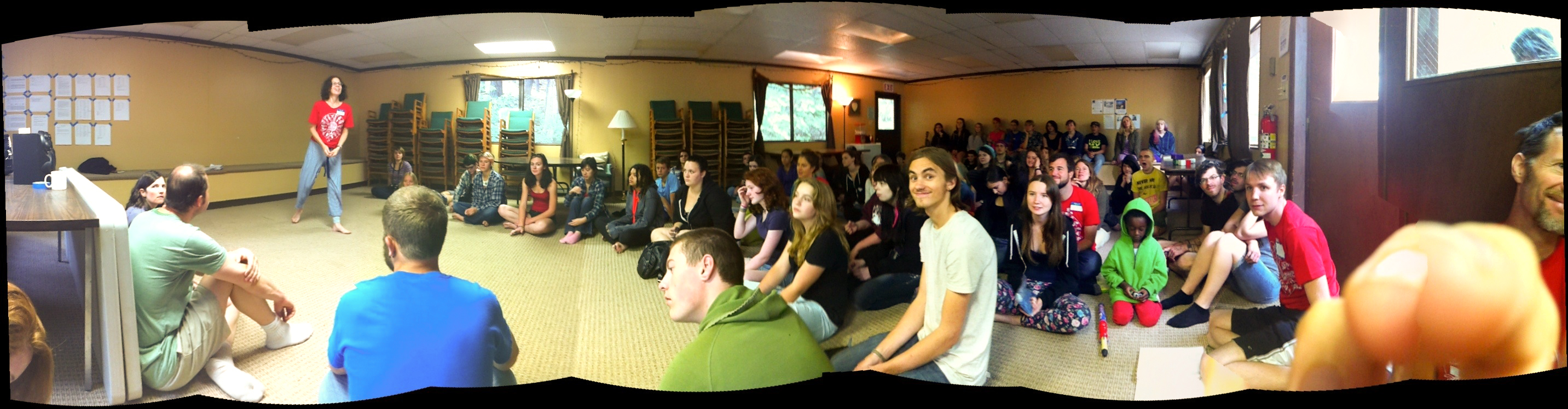
First meeting

20130730-IMG_3061

Outside meeting

20130802-IMG_3064

Hike to the haunted cabin

20130731-IMG_3062

Meal-time circle

20130802-IMG_3066

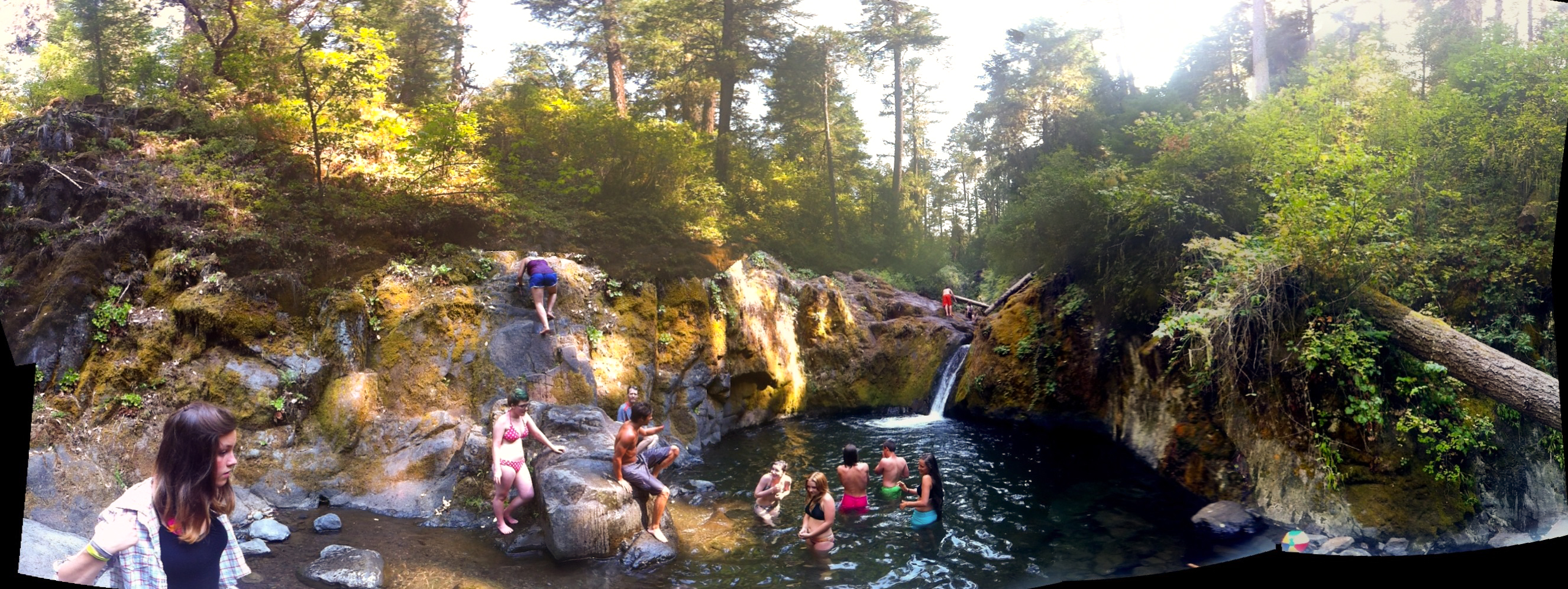
Campers at the swimming hole

20130802-IMG_3065

Tilke’s madrone tree art

20130803-IMG_3067

Crowd in front of Uncle Joe’s

20130801-IMG_3063

Prom

20130805-IMG_3068

Post-camp staff meeting. Yes, we are tired.

Dads really come in handy. Maybe especially my dad.
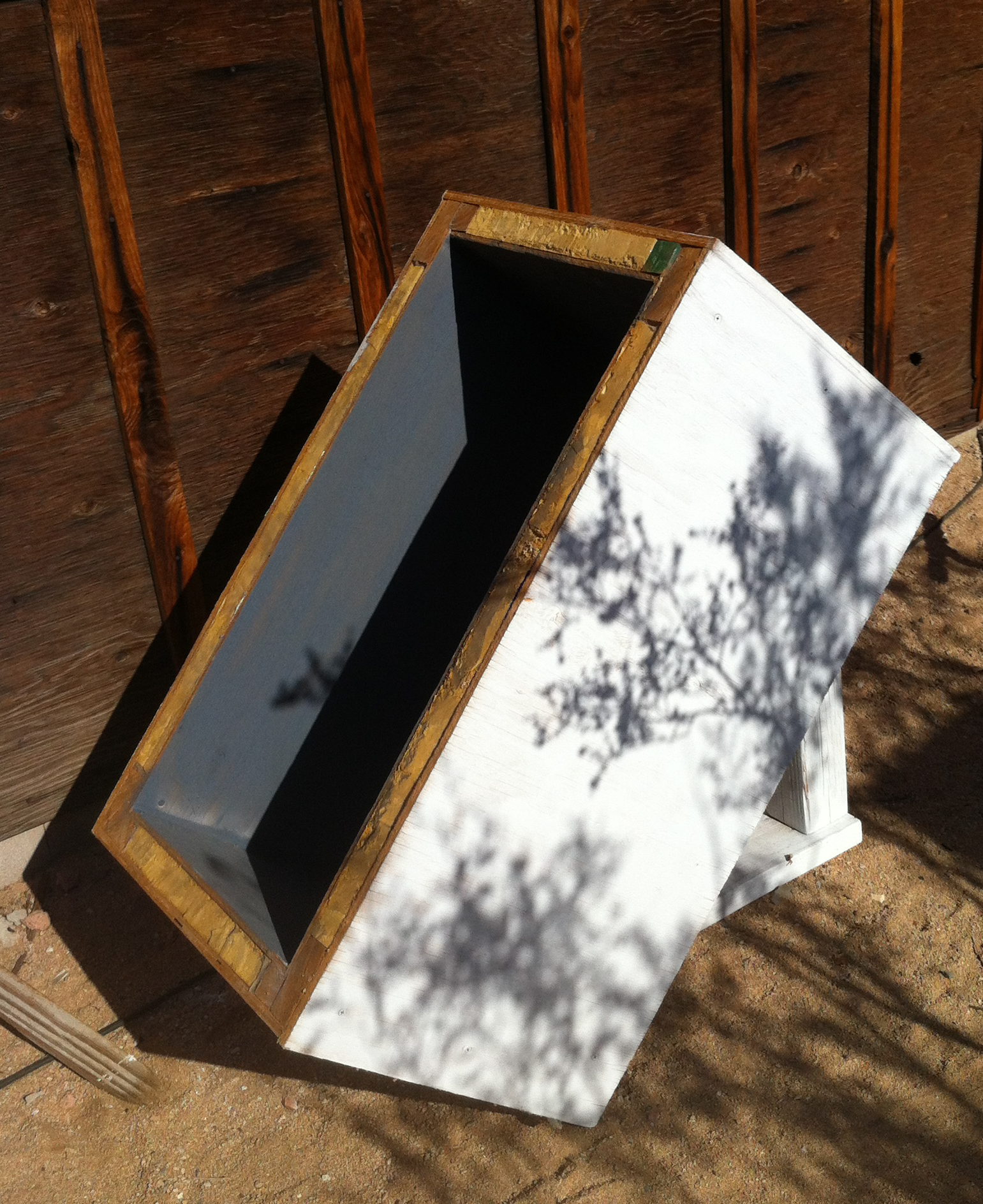
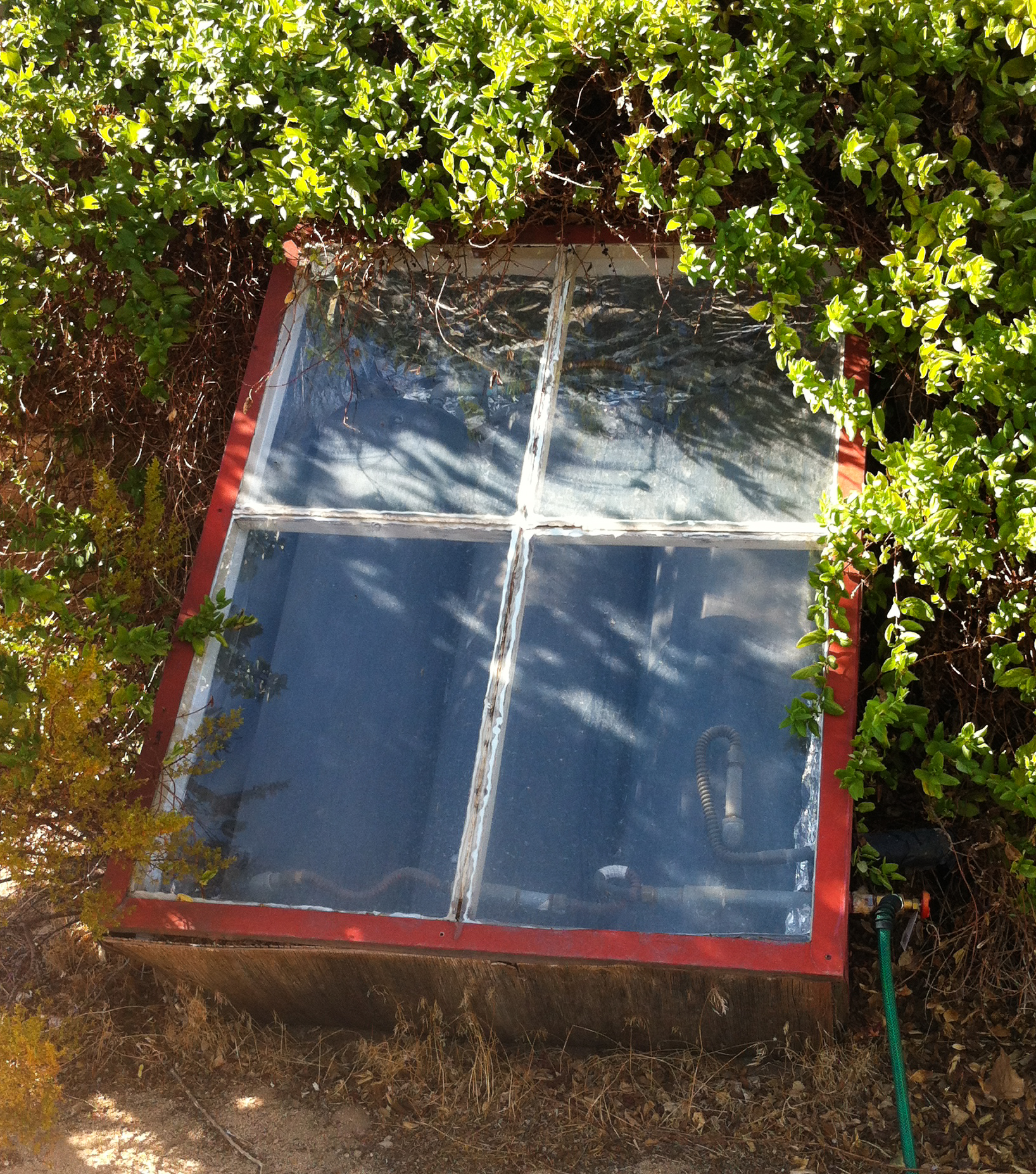
I’m building a solar batch water heater for my trailer. Where did I get that idea? My dad. He’s built two:

20130720-IMG_2227

One for the house

20130720-IMG_2226

And one for the bathhouse

Where did I get the tank? My dad. He saves stuff that he finds which just might be useful someday. This habit has its pros and cons, of course, but I’d put him just on this side of the line between saver and hoarder. He heard I wanted to build a solar batch water heater and had “just the thing,” pulled out of an old water heater or something.

20121122-IMG_0062

Tank

The design, of course, is mostly my dad’s with a few of my own (primarily the over-engineering) and the internet’s (black, not reflective, box).

20130720-IMG_2225

The white and grey are just primer. The inside will be black and the outside will be a color of Reanna’s choosing.

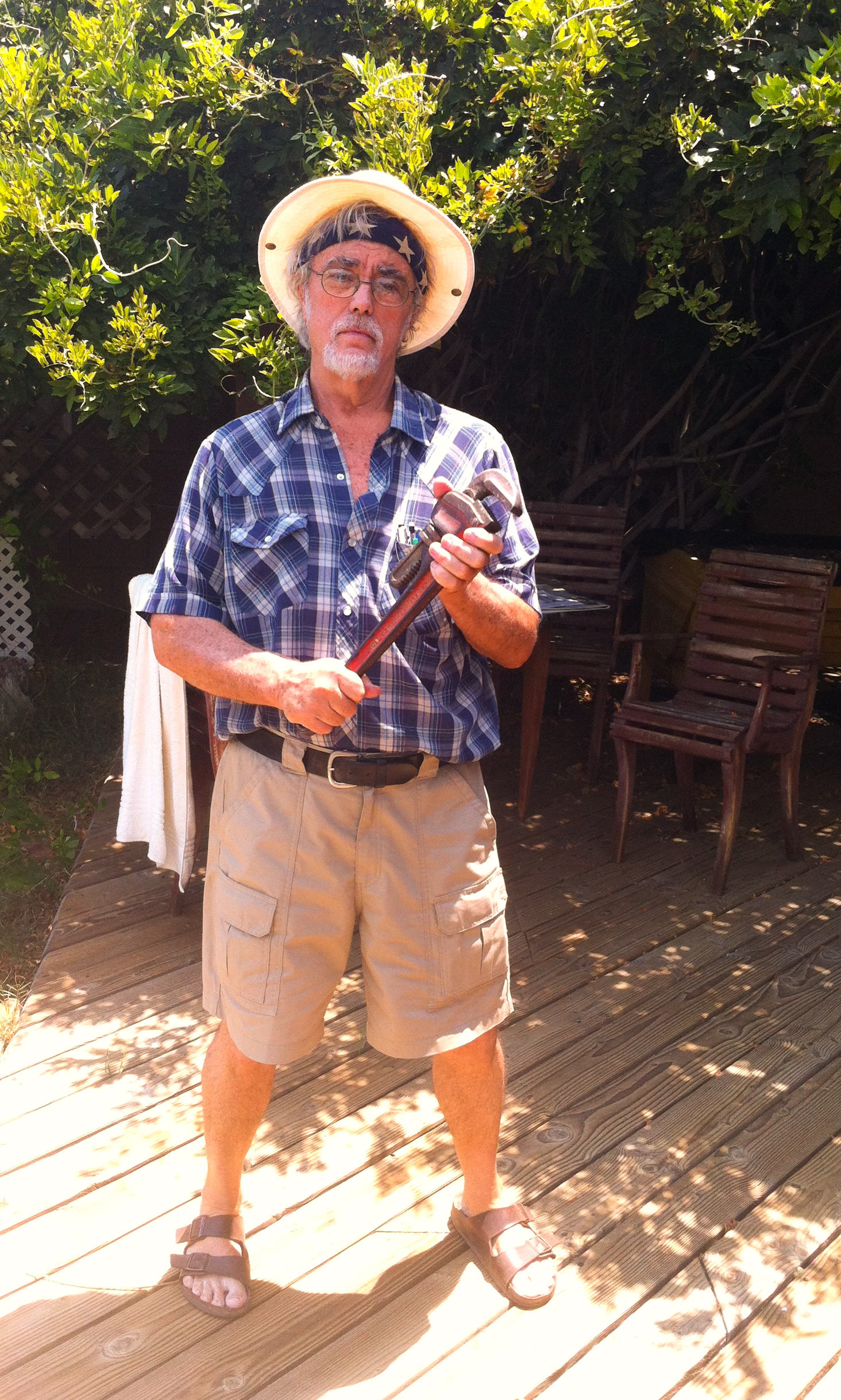
The major stumbling block so far has been pulling the square-head plugs out of the tank. My wrenches were just rounding the corners. I’d been scouring the internet for a week for a 15/16″ square offset wrench, my best guess for solving the problem, but apparently which you just can’t get anymore. The solution? Ask my dad. “You need a big pipe wrench. I’ve got one in the bottom drawer of my tool box.” He not only had the wrench, but knew how to use it, and the plug was out in a minute or two.

20130718-IMG_2175

Dad with pipe wrench

My dad is a commercial photographer, sound engineer, and musician. Where did he learn plumbing? I don’t know, but he did say that he got that pipe wrench from his own dad in the 60s.

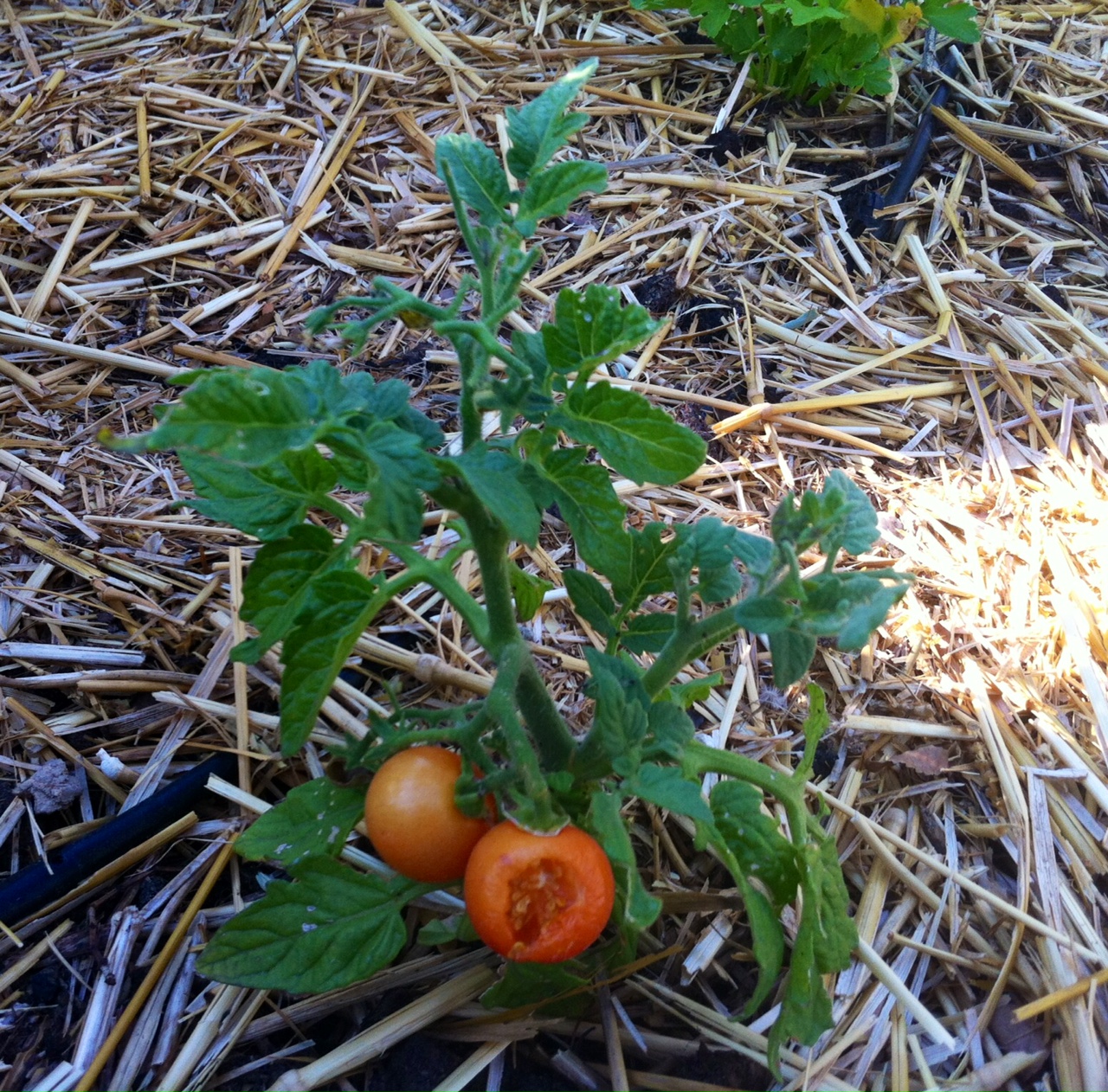
May 18, 2013: Something has been eating my new garden for a while now. It couldn’t be rabbits. I’ve already done rabbit-proofing. That leaves lizards, squirrels, birds, and insects. Neither Reanna or I had ever seen any of those in there, which makes me think nocturnal, but rabbits are the nocturnals on the list, and it’s not rabbits.

Tomato

Tomato, top leaves & part of a fruit eaten

Pepper plant, topped off

Pepper plant, topped off

Nub of cantaloup stem

Nub of cantaloup stem

This barren ground used to have cilantro growing in it.

This barren ground used to have cilantro growing in it.

I spent some time today, sitting quietly, watching for the perpetrator. Nothing came by except a hummingbird. I had a nice time. As I sat I remembered the story of the homesteading Keys family, up in what would become the Joshua Tree National Park, staking out their garden with shotguns every day. They grew all of their own food except for sugar and flour. I can drive a few minutes and buy groceries, but they had to go to Beaumont for supplies, two days away. Still, the basic principle is the same. People have been doing this as long as people have been growing food.

My stakeout spot, in the old pigeon pen

My stakeout spot, in the old pigeon pen

My view of the garden for the day

My view of the garden for the day

Maya came by later and said it was probably birds. She’s been gardening around here for years, with great success, so she’s probably right. Reanna had already bought some bird netting–technology that could have saved the Keys a lot of time and bullets.

May 19, 2013: We put up the bird netting:

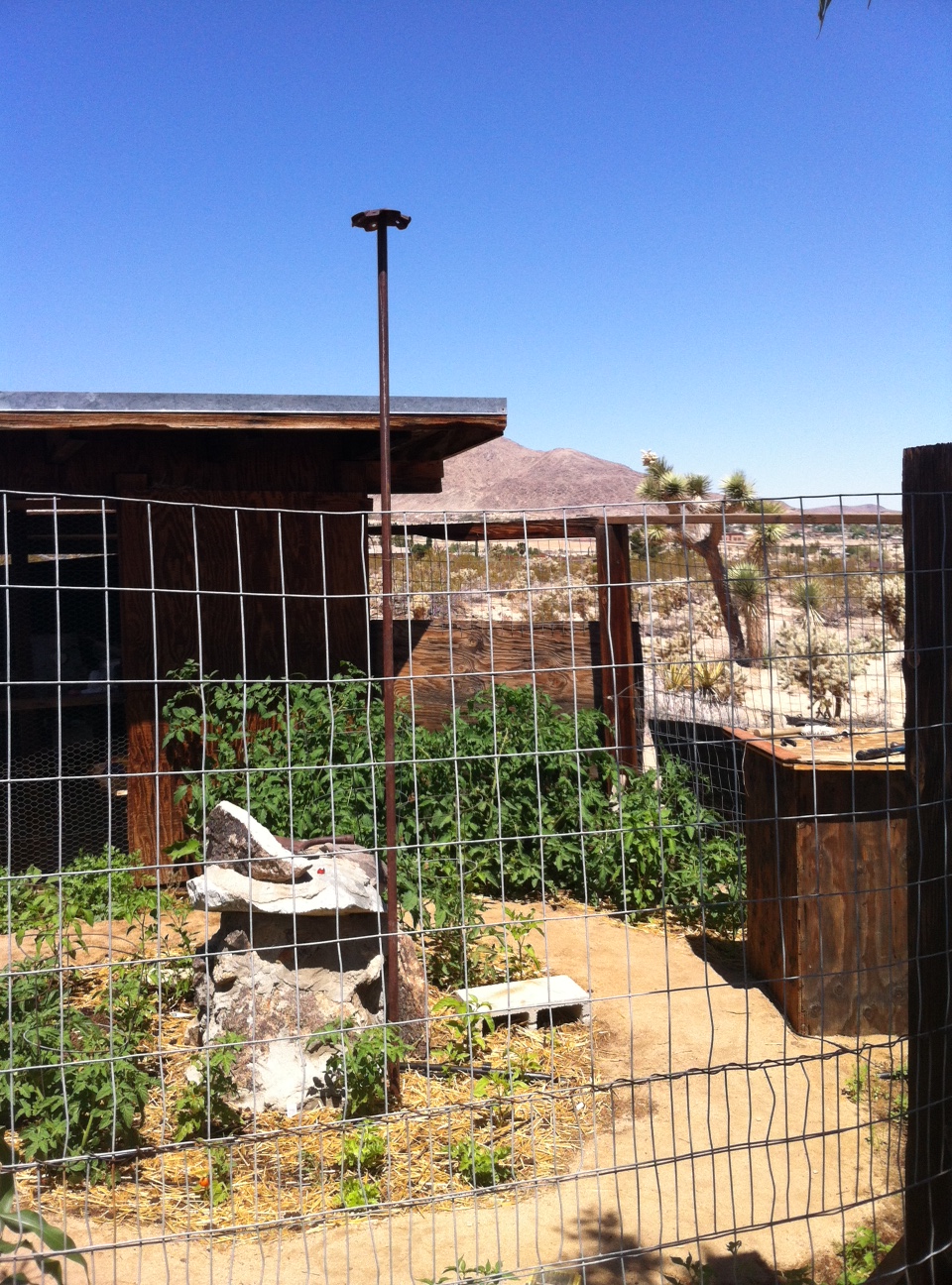
I pounded a pole into the ground and mounted an old hub on the top.

I pounded a pole into the ground and mounted an old hub on the top.

Attaching rope and bird netting to the hub and the fence

Attached rope and bird netting to the hub and the fence

Reanna in completed garden fortress

Reanna in completed garden fortress (the plywood and corrugated metal are wind-breaks against our crazy south-west winds.

I didn’t particularly want a fortress garden. So many desert gardeners end up with them. I like it, though–I guess it’s my fortress, and that makes the difference.

Aaron & Ronda's fortress garden

Aaron & Ronda’s fortress garden: lumber, rebar, mesh, bird netting, and shade cloth

Karen’s fortress garden: lumber, wire mesh, corrugated fiberglass

Tee & Eric's garden fortress

Tee & Eric’s garden fortress: lumber with 1/4″ wire mesh on 5 sides, apricot tree inside.

May 24, 2013: Reanna caught a rabbit in the garden today. Way back in the rabbit-proofing stage, I’d missed a spot under the ephedra that grows through the fence under the hose bib. Hopefully that does it, because the garden is still getting eaten!

New rabbit proofing, by Reanna

New chicken-wire rabbit proofing, by Reanna

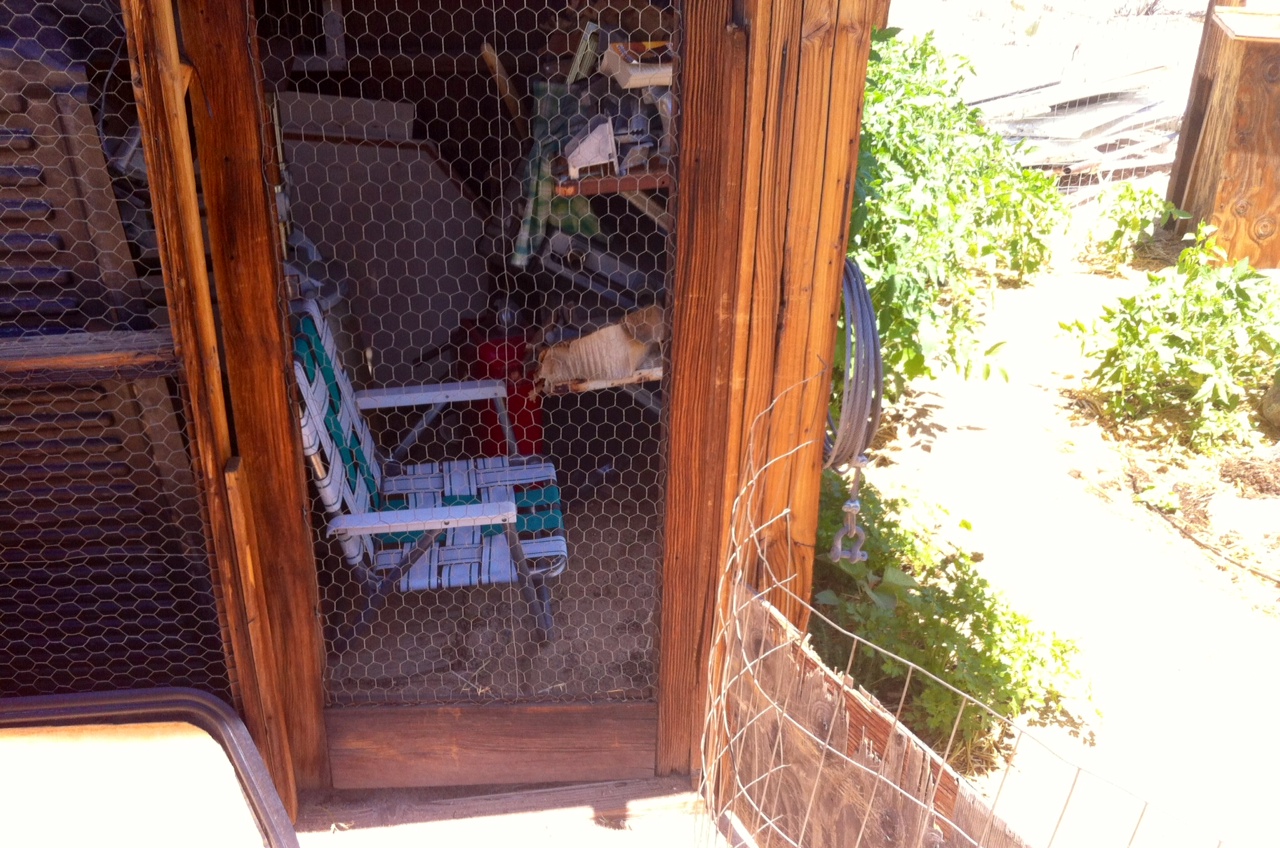
May 27, 2013: The garden continues to be eaten. Today we caught a lizard in there. We didn’t see it eating anything, so no smoking gun. I’ve only ever seen lizards eating bugs around here. If it’s gotten a taste for pepper plant leaves, we’re in trouble. It crawls through chicken wire no problem. Covering the whole garden in wire mesh would be a big job.

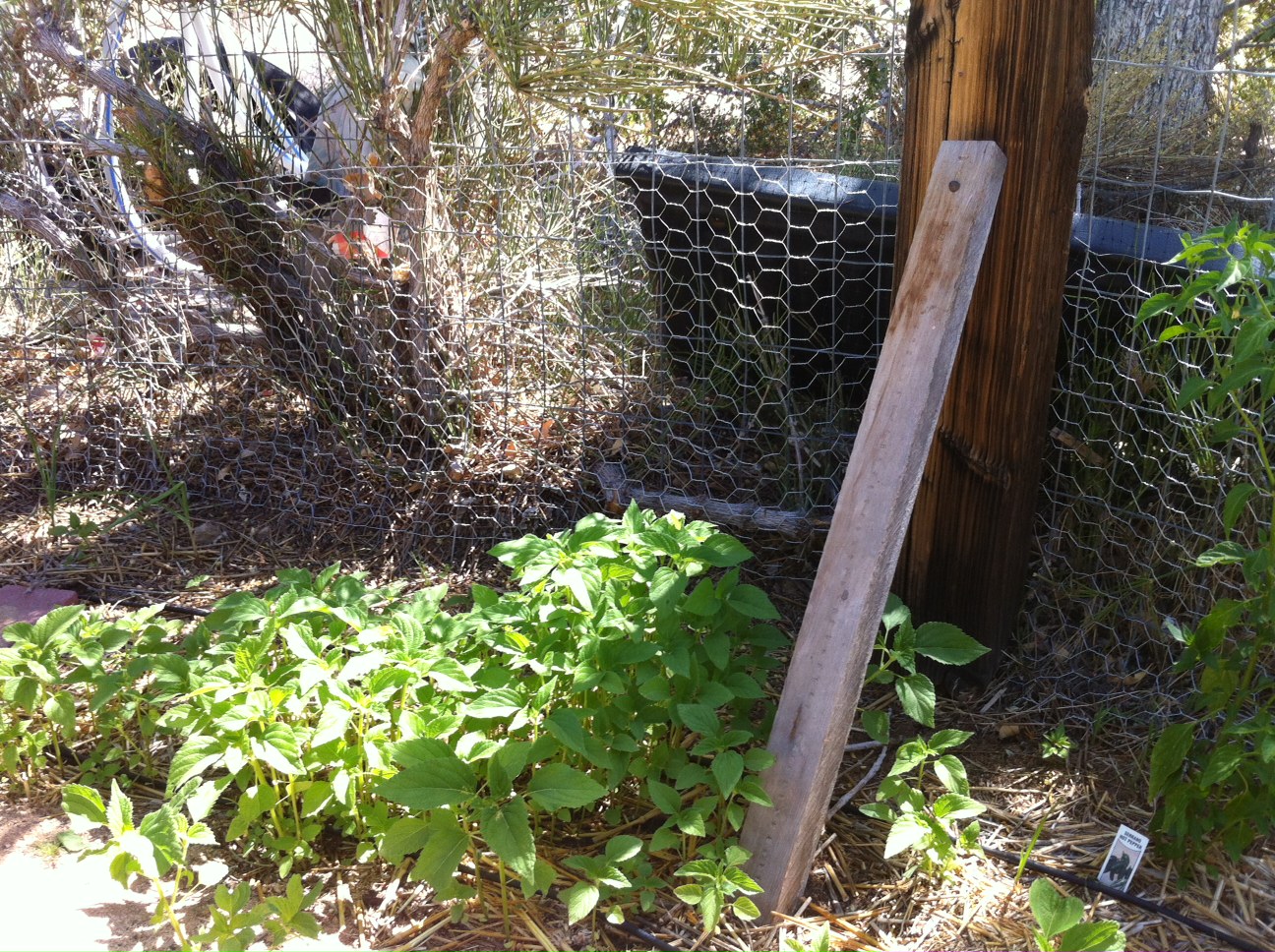
May 28, 2013: Reanna caught another rabbit in the garden and found another crack in the fortress, behind the compost bin, which she shored up. Does that let the lizard off the hook?

June 1, 2013: Found another lizard in the garden and stayed still enough that it kept going about its business for a couple minutes. It drank water out of our drip system but I didn’t see it eat anything. Something is still at it, though. The peppers are disappearing, and it’s started eating marigolds, too. This could take a while.

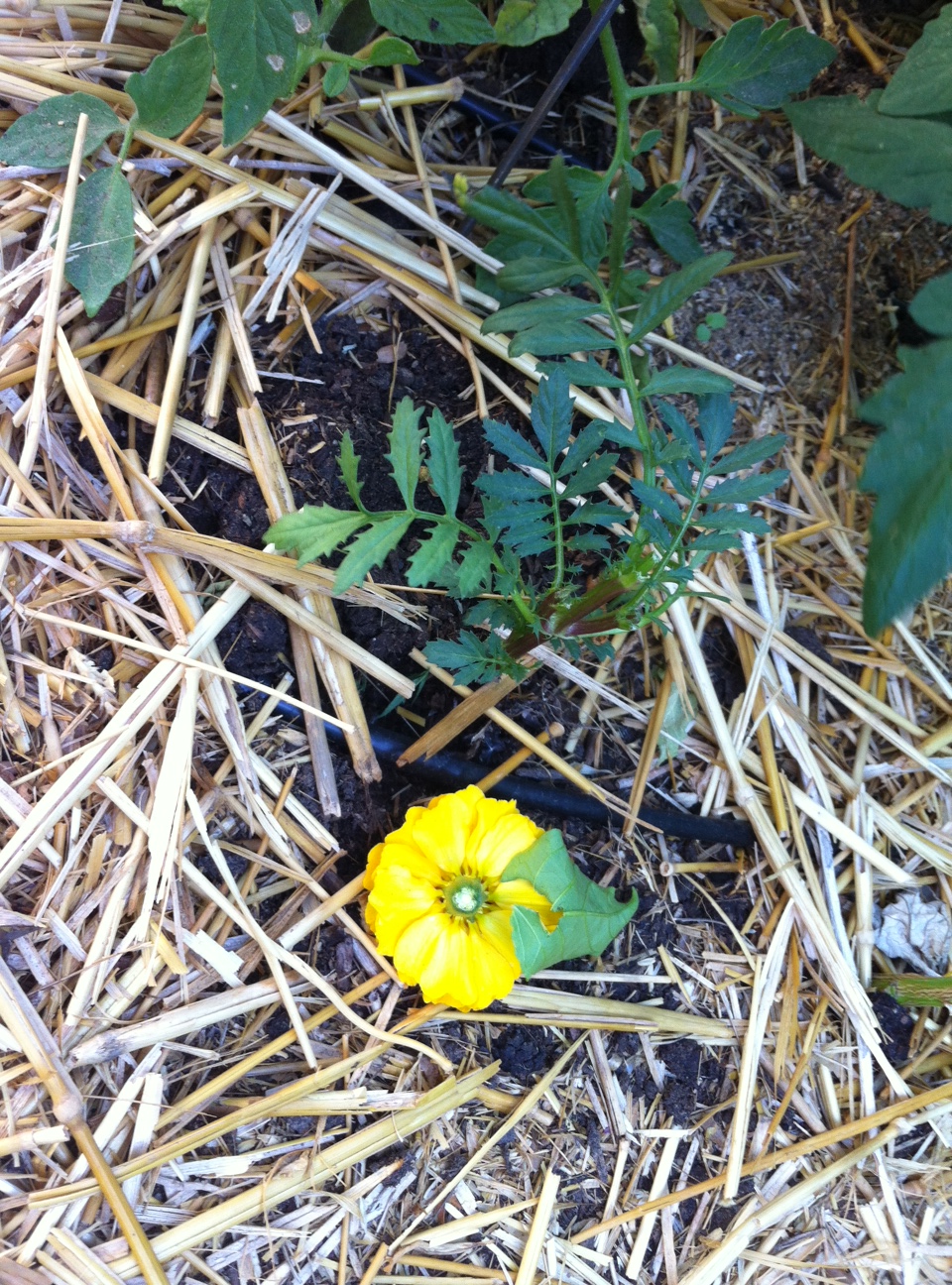
Marigold, stem eaten. The leaf lying partly on the blossom is a partly munched pepper leaf. Oh, the carnage!

Marigold, stem eaten. The leaf lying partly on the blossom is a partly munched pepper leaf. Oh, the carnage!

Because it is so dry in Joshua Tree, water is great for cooling off. According to my calculus-free, 200-level physics education, this works because a tiny bit of the heat energy stored in our bodies is used up every time a water molecule evaporates. It’s almost like the water molecule uses our body’s heat to achieve escape velocity, to become a gas. A lot of water evaporating creates a significant cooling. This is how sweating cools us, if we’re lucky enough to be in a dry area.

So when it is hot, which is every day in the summer, we get wet a lot. Inside, we have spray bottles handy so we can spray each other whenever someone starts complaining about the heat.

Above the stove is the handiest place for the spray bottle.

Outside, we often hose each other off. A good drenching keeps us cool even on the hottest days, until we are dry. Granted, that might only be for 15-20 minutes on a really hot day, but comfort is worth taking breaks that often.

If we’ve stored up some heat from a bike ride or forgetting to hose off, we also have a stock tank in the yard for dunking ourselves:

Reanna, cooling off.

The water stays cool even on the hottest days, also because of evaporation, so it is always refreshing to take a dunk. I built the little platform so when we drain the tank, we can water our plants.

12-inch dirt-filled stock-tank platform with screen lid and hose outlet. This photo was taken before I put plank decking on each side of the platform so we don’t get our feet dirty getting in and out.

We also got a “swamp cooler” from our friends Mike and Sarah. It wasn’t big enough to cool their house, but it’s good for our trailer. Reanna sewed a sleeve to funnel the air into our back window, so we didn’t have to cut a big hole in the wall.

Swamp cooler, on home-made platform

Reanna’s sleeve, held to swamper with a drawstring

Sleeve, inside window, held open by a wire frame

It makes a huge difference. A swamp cooler is simple and effective: A pump pulls hot, dry air from outside through wet sponges, creating cool, moist air inside. The physics involved is similar to sweat-cooling, except the heat energy used to turn the water into a gas is drawn from the air itself.

It requires simple enough plumbing that I could handle it myself:

A splitter where our (lead free) hose feeds the trailer, fitted with a compression joint to attach copper tubing. You can kind of see the copper-tube cutter (red) at the bottom of the frame.

Another compression joint, feeding the float valve that lets water in when the level gets low.

Swamper, inside: The float valve (blue) lets water in. The water pump (green) pulls it up and pours it down the three sponges in the left, right and back (removed) walls. The fan (drum at top) pulls the air in through the sponges and pushes it into the trailer. Simple!

The most fun way to use water to cool off, of course, is swimming. My mom got Reanna and me a month’s pass to the pool at the Joshua Tree Retreat Center (AKA Mentalphysics) as a wedding present, and we used that quite a bit. It was awesome. Thanks, Mom!

Reanna at the JT Retreat Center. Note luxuriously empty pool.

Reanna & Rob at the Joshua Tree Inn’s Hacienda Pines pool.

Matt at JT Inn pool.

Backstroke race at the Yucca Valley High School pool, also open to the public in the summer.

Kids in Ken & Katie’s blowup pool.

Joshua Tree is in the Mojave Desert and hot in the summer. The average high is 100 degrees. That’s not Sonora Desert hot, but it’s still hot. My subjective thermometer of summer temperatures is something like this:

70s: Nice. Rare.

80s: Warm. Still nice.

90s: Hot. The sun is hot.

100s: Baking Wall of Heat. The sun is hot, but the air is also hot.

One option for dealing with this is not dealing with it: Stay inside with the swamp cooler on. If I spend most of the day in the office, my moments spent outside feel refreshing, a warm-up.

Another is dressing for it. If you can avoid the sun, say in a hammock under a tree, I advise being as naked as you can get away with. Bare skin is pretty good at keeping cool via sweat evaporation, at least in the dry of the desert. If you can’t avoid the sun, it’s more complicated. Here’s my yard-work costume:

1) Straw hat with a wide brim, loose enough for ventilation, but not loose enough to blow off in a breeze. I think the sun is good for us, but getting sunburned is not. I get sun on my skin every day but avoid burning. The hat helps with that.

2) Polarized sunglasses. I also think unfiltered sunlight is good for our eyes, and I get a fair amount every day, but hours in this kind of intense light makes me feel like I’ve sunburned my retinas.

3) My best white dress shirt. My wife Reanna was appalled at this sacrifice, but this is how I justify it: a) I do way more yard-work than I do dressing up, so it gets more use. b) It fits really well, so it’s comfortable, doesn’t restrict my motion, and doesn’t get tangled in the saw or drill or plant-to-be-pruned. c) It’s bright white, so reflects the sun really well. d) It has long sleeves, so I don’t have to wear sunscreen on my arms, but I can roll them up when appropriate. e) It has a collar which I can turn up to protect my neck. When the sun is low, my hat doesn’t do the trick for my neck. Again, less sunscreen. f) It buttons up, so I can button or unbutton, as needed, for venting. Most often I have only the second-to-top button fastened for maximum venting plus protecting the skin of my upper chest, which received more than its share of sun damage in my youth. g) Once it has some paint and a few tears, neither of us will feel remotely precious about it.

4) White work gloves. Sometimes gloves are not appropriate to the work I’m doing, but when they are, I wear white cloth gloves with rubberized palms and fingers. They save sunscreen and save my delicate musician hands from injury.

4) Shorts to the knee. Protects my thighs from sun while allowing leg-venting. This does leave my calves vulnerable to sun. In the middle of the day they get somewhat shaded by my body. At other times I can often find a shadow to fall on them. If not, sunscreen or sunburn. I find the trade-off worthwhile.

5) White socks. This is the part I’m most conflicted about. I generally eschew socks when I can get away with it, but in this kind of heat my feet can sweat and get stinky and uncomfortable. Plus, socks help make having sand in your shoes less uncomfortable. And they protect your ankles from sunburn.

6) Light, vented shoes. I wear Nike Free 3s, the most comfortable shoe yet created. They do not protect feet from dropped tools or lumber but, cross my fingers, so far it’s worth it.

Here are a couple photos of the costume, taken by Reanna, missing only socks and gloves:

I’ve known Maya since my first session of Not Back to School Camp in 1999. It was her last year as a camper and I had the good fortune to be able to be heading in the same direction as her after camp. We drove to California together and exchanged life stories. She charmed me with her friendliness and her feistiness. When I asked her why she had purple hair, she said, “I like the way it makes people smile.”

My good fortune has continued. I am so grateful to have made a lifelong friend in Maya, that she married my brother Damian, that she has chosen to live near my family in Joshua Tree, that she created my first nephew, Oliver, and that she has made herself such a strong, kind, smart, beautiful woman.

Happy birthday, Maya! I love you.

Maya, with Ollie on his Birthday, 2012

Maya, Ollie, Damian, 2012

Reanna is from the Pacific northwest and I grew up in Joshua Tree, CA, where we are currently living. We have an ongoing conversation about humidity here because having grown up in a wet climate, she is vigilant for the ways that moisture in the air decomposes things. “If we don’t keep it warm in here, won’t condensation damage the books?” No, it won’t, and probably wouldn’t even if we had a constantly boiling pot of water. The only place I’ve ever seen mildew in Joshua Tree is in one of our bathrooms which, until very recently, had no windows and no fan. This was not aggressive mildew either, just noticeable every once in a while. “If the roof of the trailer has leaks, won’t there be tons of mold in the walls?” No, not likely, because even if rain was pouring right through the trailer, it would be completely dry again within hours.

I have never tracked humidity levels before, so while I knew that Joshua Tree was dry, I didn’t know what level of humidity qualified as dry. I also didn’t fully understand the different measurements of humidity that are floating around out there. The short version of that story is that there are three units of humidity: absolute, specific, and relative humidity. Absolute humidity is grams of water per kilogram of moist air and specific humidity is kilograms of dry air. Relative humidity is more complicated. If I understand correctly (if incompletely) it is the ratio between 1) the pressure that the water vapor in a given amount of air would exert on the insides of a container, should it somehow be trapped there without its accompanying dry air, and 2) the pressure below which water would start condensing out of the air. Relative humidity is the measure of humidity that you usually see in weather reports, partly because it takes into account temperature–at lower temperatures, air holds less water.

Here are some cities with different levels of relative humidity, to give a sense of where we are in Joshua Tree. I’ll also include precipitation. (Data is from Weather Underground unless otherwise noted.)

Seattle, WA, 2011: High 99%, Low 34%, Average 82%, Precipitation 12.92 inches

Honolulu, HI, 2011: High 96%, Low 18%, Average, 65.6% Precipitation 23.82 inches

Joshua Tree humidity, 2011: High = 83%, Low = 10%, Average = 30.7%, Precipitation 1.53 inches

Las Vegas, NV, 2011 (the driest city in the US): High 98%, Low 2%, Average 28.7%, Precipitation about 2.5 inches (precipitation according to climatestations.com)

Kolkata, India one of the most humid cities in the world, on July 15, 2011: High 94%, Low 64%, Average 84%, Precipitation 0.0 inches

And Kartoum, Sudan (Sahara desert), on January 4, 2011: High 43 %, Low 10%, Average 24%, Precipitation .51 inches

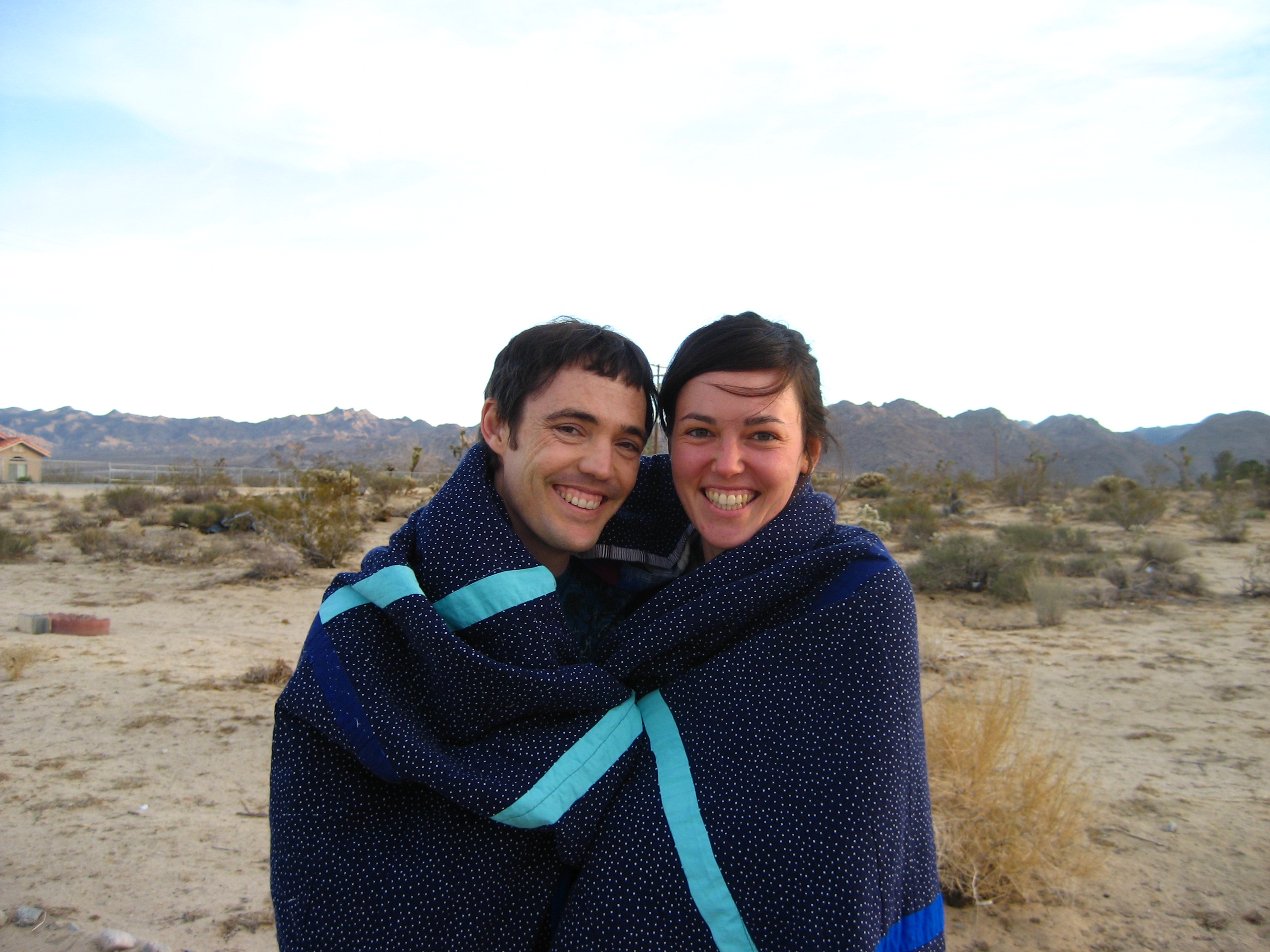
Nathen, Reanna, Quilt, Desert

« Previous PageNext Page »